Cloud Cost Audit
We connect billing data, resource inventory, usage, and ownership to identify the areas worth investigating.
Talk to our expertsCloud Cost Optimization
Our cloud cost optimization services help you reduce cloud costs by connecting your bill to resource usage, ownership, and the performance your applications need.
Cloud signals
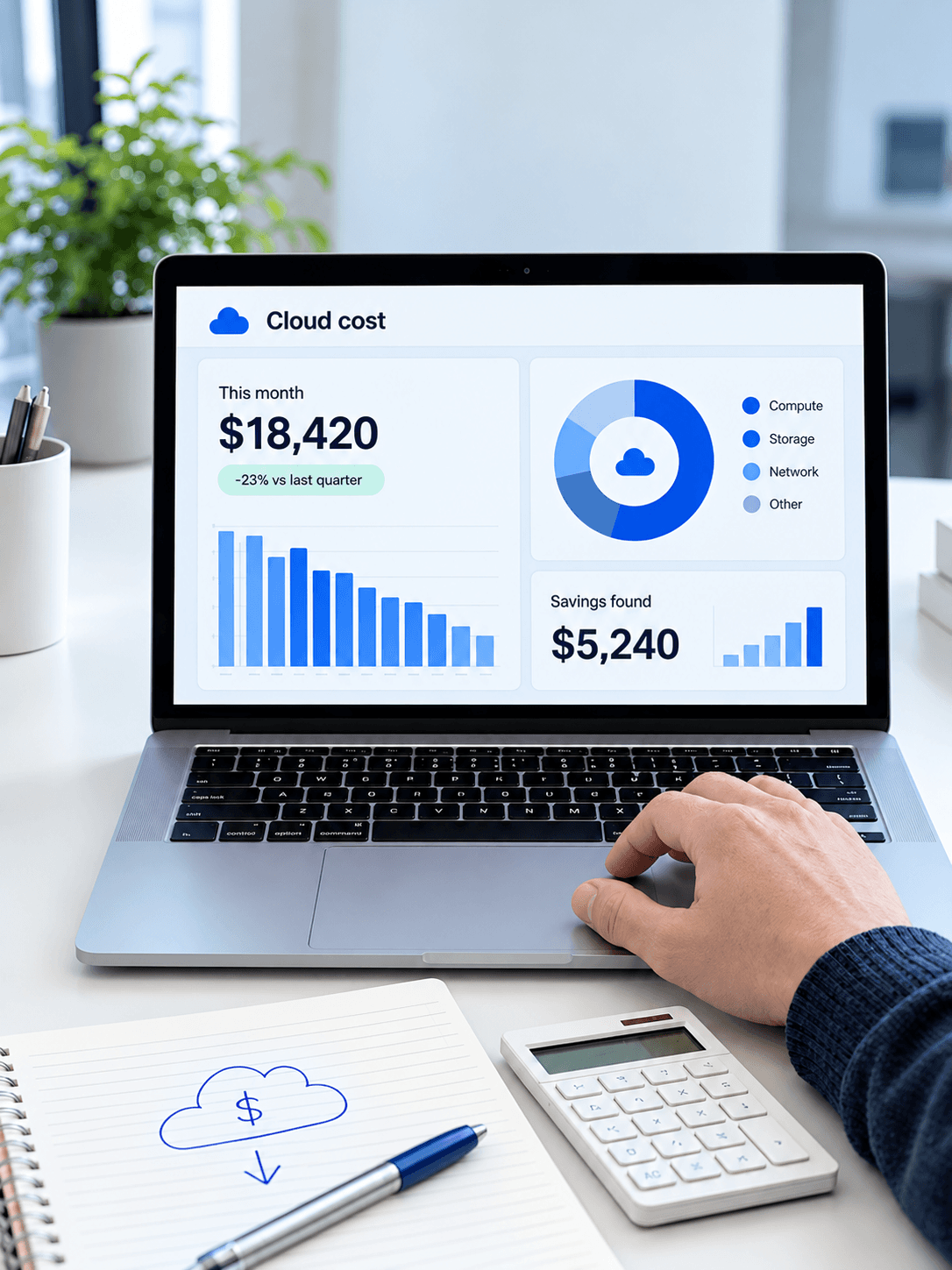
A rising bill can reflect real demand, avoidable waste, or a mix of both. We investigate the reasons before changing resources.
Unused development environments or resources with little activity continue to generate charges.
Capacity was chosen for a peak or an early estimate, but actual usage no longer supports that size.
Costs cannot be tied consistently to a team, workload, environment, or owner.
Old snapshots, unattached volumes, or stored data remain without a reviewed retention or ownership decision.
Eligible, predictable usage is not reviewed against commitment options, or existing commitments no longer fit demand.
We review the cloud cost management decisions that drive your bill. We can also build AI tools that monitor your cloud spend and flag possible waste for human review.
We connect billing data, resource inventory, usage, and ownership to identify the areas worth investigating.
Talk to our expertsWe compare resource capacity with usage and performance requirements before proposing smaller or different configurations.
Talk to our expertsWe review eligible usage, commitment coverage, and expected demand before considering a purchasing commitment.
Talk to our expertsWe review scaling policies, thresholds, and minimum capacity so the environment responds to demand within agreed service limits.
Talk to our expertsWe review ownership, retention, access needs, and recovery requirements before removing or changing stored data.
Talk to our expertsWe make spend easier to review by workload and team, with alerts that prompt owners to investigate changes in usage.
Talk to our expertsFinOps consulting connects financial decisions with engineering ownership. Our cloud cost optimisation review helps your team build a repeatable habit of checking usage, cost, and business need.
We define useful spending thresholds and review points. Budget alerts notify owners; they do not automatically stop all cloud spending.
Talk to our expertsWe agree on workload, environment, and ownership labels so cost reports can support decisions and follow-up.
Talk to our expertsWe connect usage and spend with responsible teams, explain material changes, and record who will act on them.
Talk to our expertsHow we work
We separate low-risk changes from decisions that need workload testing, financial review, or a longer operating view.
Spend and resource usage
We review billing, resource inventory, usage patterns, ownership, and current commitments.
Reviewed low-risk changes
We prioritize changes with clear ownership and limited operational risk, then validate their effect.
Capacity and commitments
We assess resource design, scaling, retention, and commitment options against expected demand.
Track changes in spend
We establish reporting and review points so owners can investigate new cost changes.
Tools & platforms
We use the billing and usage information available in your cloud environment to support an AWS cost optimization or Azure cost optimization review, or a Google Cloud cost review.
AWS Cost Explorer and billing reports can help investigate spend and evaluate eligible commitments. We connect that information with workload usage and resource ownership before proposing changes.
Azure Cost Management supports cost analysis and budget alerts. We review costs alongside resource utilization, ownership, and the limits your applications need to operate within.
Cloud Billing reports and budgets help teams review spend and investigate changes. We relate those views to projects, workload owners, and resource decisions; budget alerts alone do not cap usage.
A considered stack, not a fixed checklist. Final choices depend on your workload and ownership needs.
Savings depend on your environment, usage, existing commitments, and the changes your team can safely make. We compare actual costs and workload behavior without assuming a fixed savings percentage.
Review unused resources, excess capacity, and retention choices against the needs of each workload.
Give teams a useful view of the costs they influence and the recommendations they need to review.
Check resource changes against service requirements so a lower bill is not the only acceptance measure.

Practical answers about cloud cost optimization.
Have a question about your environment? Contact our team.
Potential savings depend on current usage, resource sizing, retention, purchasing commitments, and your performance requirements. An environment with little avoidable waste has a different starting point from one with unused resources. We review the evidence before discussing opportunities and do not promise a savings percentage.
A resource change can affect performance if it is made without understanding the workload. We review usage and service requirements, then plan validation and a recovery path for agreed changes. Cost reduction should be assessed alongside application behavior and reliability.
FinOps is a way for engineering, finance, and business teams to share responsibility for cloud spending. It combines cost visibility, ownership, planning, and regular review. The aim is to connect spending decisions with business needs rather than treat every cost as waste.
An audit typically depends on the number of accounts or subscriptions, billing access, tagging quality, and the range of services in use. Historical usage and workload context also affect the review. We agree on the audit scope before proposing a schedule.
These are cloud purchasing options that can reduce eligible usage charges in exchange for a commitment. On AWS, Reserved Instances apply to specified instance configurations, while Savings Plans use a spending commitment for eligible usage. The right choice depends on demand, eligibility, and how much flexibility you need.
We discuss the fee and scope for an audit, implementation project, or ongoing support before work begins. The proposal depends on the environment, access, analysis, and delivery responsibilities involved. Your cloud provider charges and any purchasing commitments are separate from our consulting scope.